
A Central Virginia Winter Plant Care Guide
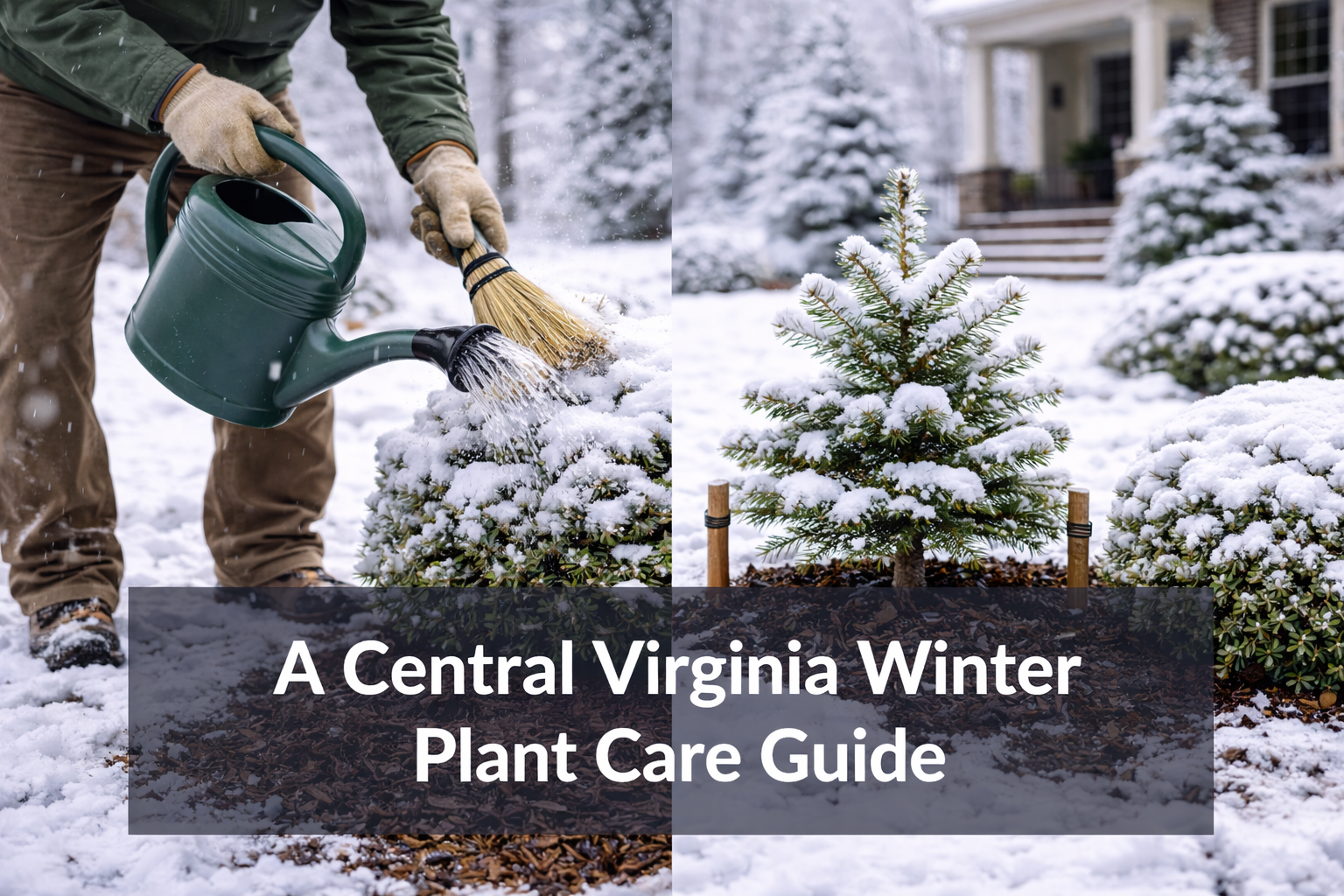
How to Protect Your Landscape Through Snow, Cold, and Freeze Cycles
Winter in Central Virginia can be unpredictable. Homeowners in Charlottesville, Albemarle County, Greene County, Crozet, Keswick, and surrounding areas often experience fluctuating temperatures, snow, ice, and drying winter winds. All of these conditions can stress trees, shrubs, and garden beds if they are not properly cared for.
This guide brings together the most important winter plant care practices to help protect your landscape until spring.
How Snow Affects Your Landscape
Snow is not always harmful to plants. Light, powdery snow can help insulate soil and protect roots from extreme cold. Problems arise when snow becomes heavy, wet, or refreezes into ice.
Best Practices for Snow on Plants
Allow light snow to remain on plants
Gently remove heavy snow from shrubs and young trees using a soft broom
Avoid shaking or forcing frozen branches
For detailed guidance, see our article on how to care for plants with snow on them.
Caring for Newly Planted Trees in Winter
Young trees need extra attention during their first one to two winters. Their roots are still establishing, and their branches are more likely to bend or break under snow and ice.
Tips for Protecting Young Trees
Remove fresh, heavy snow when branches are flexible
Avoid touching frozen branches or ice buildup
Mulch around the base to protect roots
Stake trees in exposed or windy locations
Learn more in our article should you knock snow off newly planted trees.
Winter Mulching for Healthy Roots
Mulch is one of the most effective ways to protect plants during winter in Virginia. It helps regulate soil temperature, prevent frost heave, and retain moisture.
Winter Mulching Guidelines
Apply mulch after the ground cools, typically late November or December
Use two to three inches of organic mulch
Keep mulch a few inches away from tree trunks
Avoid piling mulch against stems or bark
Our full breakdown is available in winter mulching: what, when, and why.
Watering Your Landscape During Winter
Even in cold weather, plants can suffer from dehydration. Evergreens and newly planted trees are especially vulnerable during dry winter periods.
Winter Watering Tips
Water only when soil is not frozen
Choose mild days with temperatures around 40 degrees or higher
Water at the base of plants, not on foliage
Focus on evergreens and young plantings
For more details, see winter watering: how and when to water your landscape in Virginia.
Common Winter Problems in Central Virginia Landscapes
Homeowners in the Piedmont region often encounter:
Freeze and thaw damage to roots
Snow and ice breakage on shrubs and trees
Winter burn on evergreens
Soil drying from wind and sun exposure
Addressing these issues early helps prevent long term damage and improves plant performance in spring.
When to Call a Professional
Consider professional help if you notice:
Broken or split branches
Leaning or unstable trees
Widespread browning on evergreens
Damage after heavy snow or ice events
Correct pruning, staking, and plant care now can prevent costly replacements later.
Winter Landscape Care in Central Virginia
Beebe Landscape Design provides professional winter landscape care for homeowners throughout Charlottesville, Albemarle County, Greene County, Crozet, Keswick, and nearby areas. From protecting newly planted trees to proper mulching and winter watering, thoughtful seasonal care keeps landscapes healthy year round.
If you have questions about your winter landscape or would like a professional assessment, our team is here to help.